To enable occupants to safely enter a fire-isolated exit which discharges to a safe location.
Access to fire-isolated exits—D2D12(1)
D2D12(1) requires that a doorway must not open into a fire-isolated exit unless it opens from a public area, a sole- occupancy unit which occupies a whole floor, or a toilet. This is to limit the number of entry points into a fire-isolated exit to retain its fire-resisting performance.
Note that D2D12(1)(a) refers to a “public corridor, public lobby, or the like”. A smoke lobby which serves at least two sole- occupancy units is a “public lobby”, and can open directly into a fire-isolated exit. Figure D2D12a illustrates permitted and prohibited entry into a fire-isolated passageway from sole-occupancy units in a shopping centre.
Discharge to areas not roads and open spaces—D2D12(2)
D2D12(2)(a) requires fire-isolated exits to discharge to roads or open spaces. However, there are some exemptions:
D2D12(2)(b) sets out the requirements for a fire-isolated exit to discharge into an area within a building (including the requirement that it be open for at least two thirds of its perimeter, to aid smoke ventilation); and
D2D12(2)(c) sets out the requirements for a fire-isolated exit to discharge into a covered area outside the building (including the requirement that it be open for at least one third of its perimeter, to aid smoke ventilation).
Figure D2D12b and Figure D2D12c illustrate some of the options available by the use of D2D12.
Travel within 6 metres of an external wall—D2D12(3)
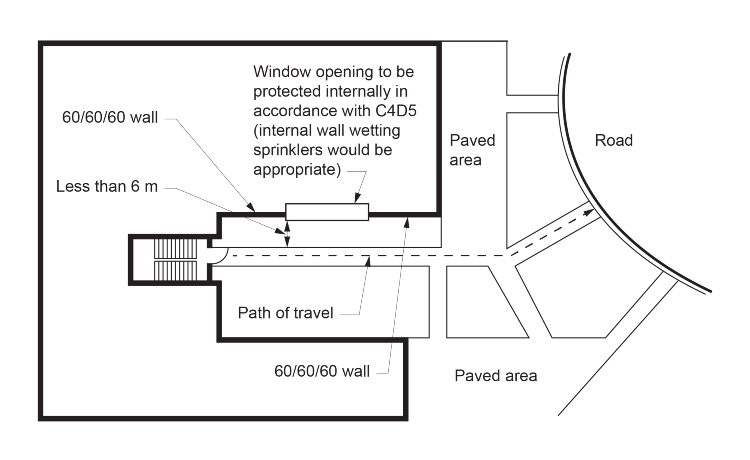
D2D12(3) sets out the FRL and opening protection requirements where the path of travel from the point of discharge of a fire-isolated exit to a road or open space necessitates passes within six metres of any part of the external wall of the building being evacuated. The provision only applies at the level of discharge. So if the exit discharges at ground level, any first storey wall or window would not need protection. The reason is that a fire on the first floor is unlikely to affect people exiting one storey below.
Smoke lobby or pressurised system—D2D12(4)
D2D12(4) requires the use of a smoke lobby or a pressurisation system to stop the entry of smoke into the fire-isolated exit, if more than two access doorways described in D2D12(4)(a) or (b) are provided in the same storey. This provision must be read in conjunction with D2D12(1), it does not over-ride it. See Figure D2D12a.
Ramps in Class 9 buildings—D2D12(5)
D2D12(5) requires a ramp where there is any change in level in a fire-isolated passageway in a Class 9 building and that change is less than 600 mm.
Figure D2D12a: Plans showing entry into a fire-isolated passageway in a shopping centre
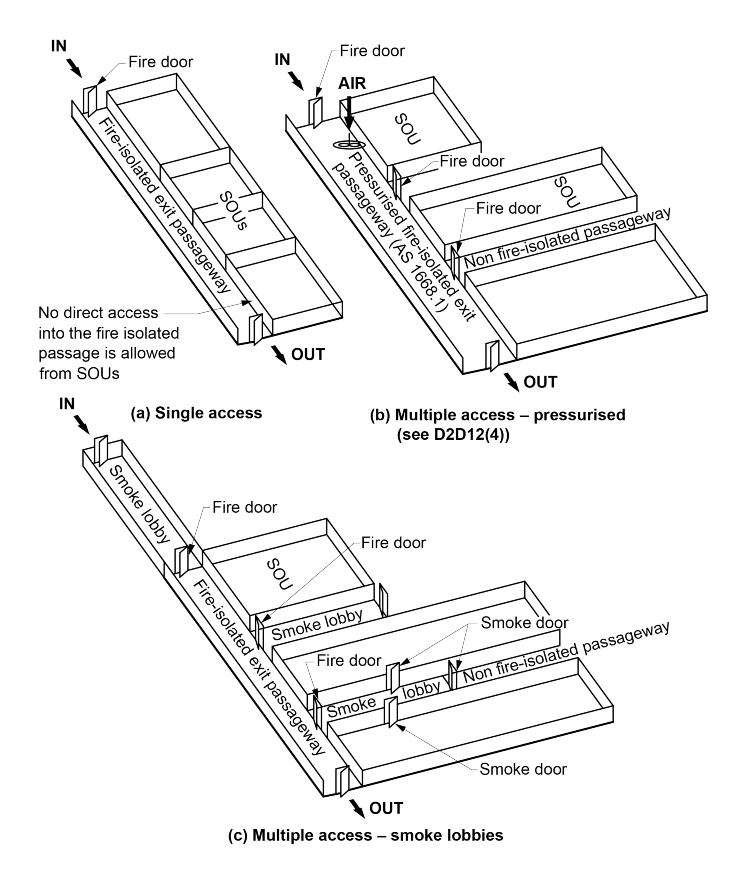
Figure D2D12b: Example of discharge of fire-isolated stair complying with D2D12(2)(b)
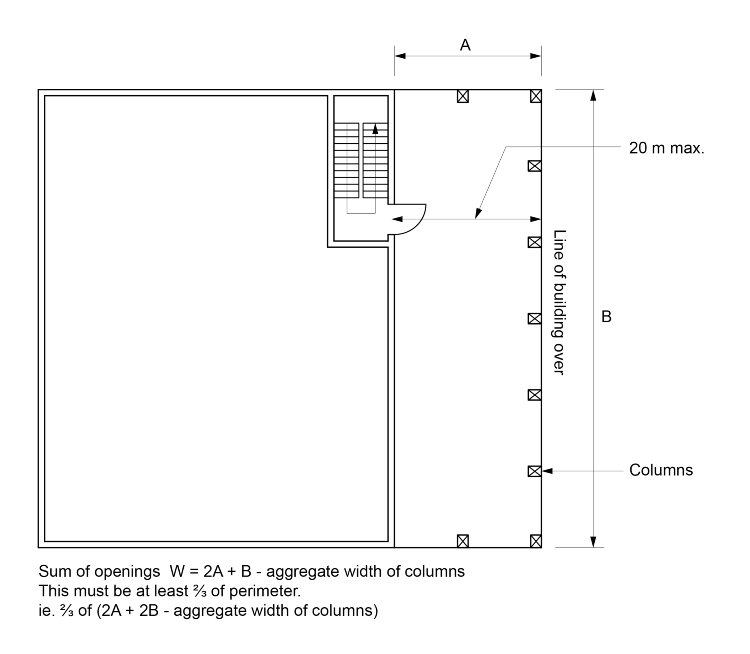
Figure D2D12c: Example of discharge of fire-isolated stair complying with D2D12(2)(c)
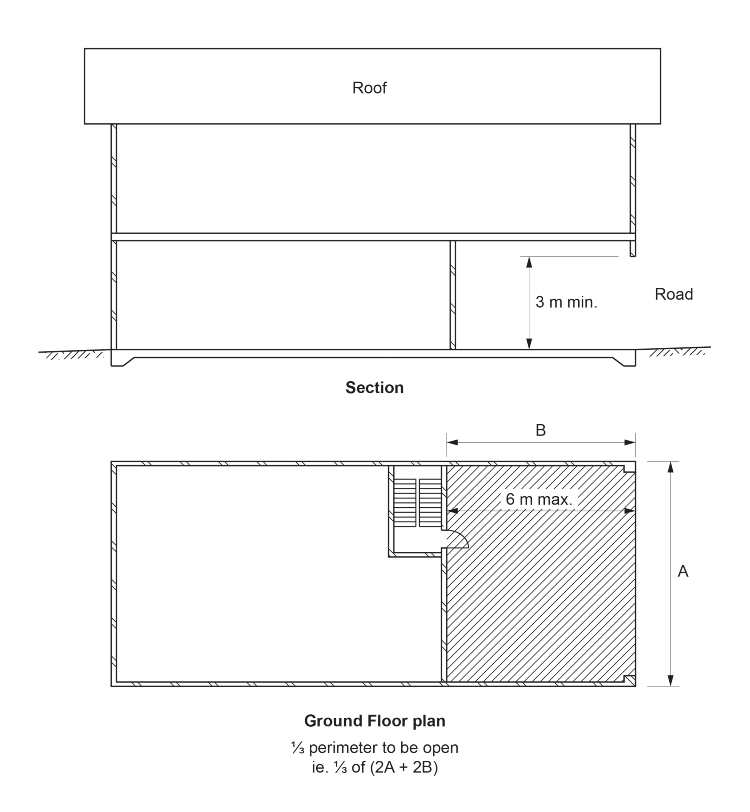
Figure D2D12d: Plan showing when walls and windows require protection in accordance with D2D12(3)