To require that if an exit is inaccessible, access to any required alternative exit must be available within a reasonable distance.
Why is this matter regulated?
Where a building requires multiple exits, the exits maximise the choices of a person evacuating, in case one exit becomes blocked.
Uniform distribution of exits—D2D6(a)
D2D6(a) requires that where multiple exits exist, they must be distributed as uniformly as practicable to improve the level of safety when evacuating.
Minimum and maximum distances are set
D2D6 specifies the minimum and maximum permitted distances between alternative exits (for example, two exits may be located next to one another, so long as they are not each other’s alternative in an emergency). Where scissor stairs are used, the shafts will be adjacent and separated by fire-resisting construction. However, the access doors to the alternative scissor stairs must comply with the minimum separation distance.
Minimum distance—D2D6(b)
The minimum distance minimises the risk of fire spreading to block the alternative exit.
Maximum distance—D2D6(c)
The maximum distance between alternative exits minimises the need to travel too far to reach an exit.
Convergence distance—D2D6(d)
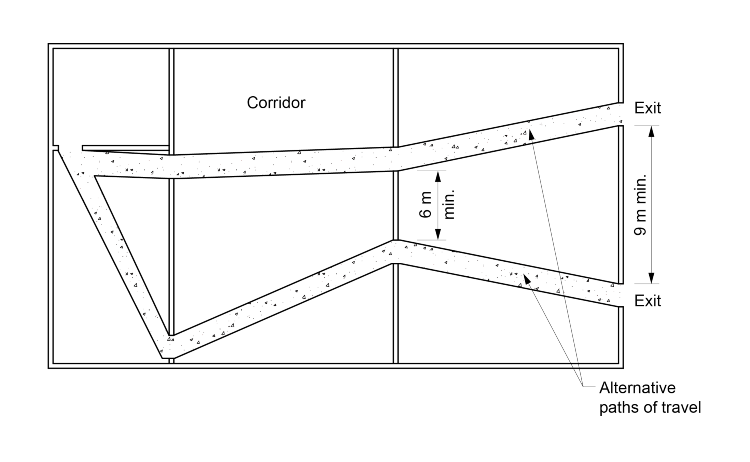
If alternative paths of travel converge too closely, both paths can be blocked by the same fire. The minimum distance between the paths of travel aims to negate this.
The minimum convergence distance only comes into operation when the paths of travel have already diverged to that distance. The paths can commence more closely together than the distance specified.
Method of measurement
The travel distances specified in D2D6 are measured in accordance with D2D20.
Figure D2D6a illustrates the method of measuring the maximum and minimum distances between exits.
Figure D2D6b illustrates the convergence prohibition on alternative paths of travel.
Figure D2D6a: Plan showing method of measuring between exits
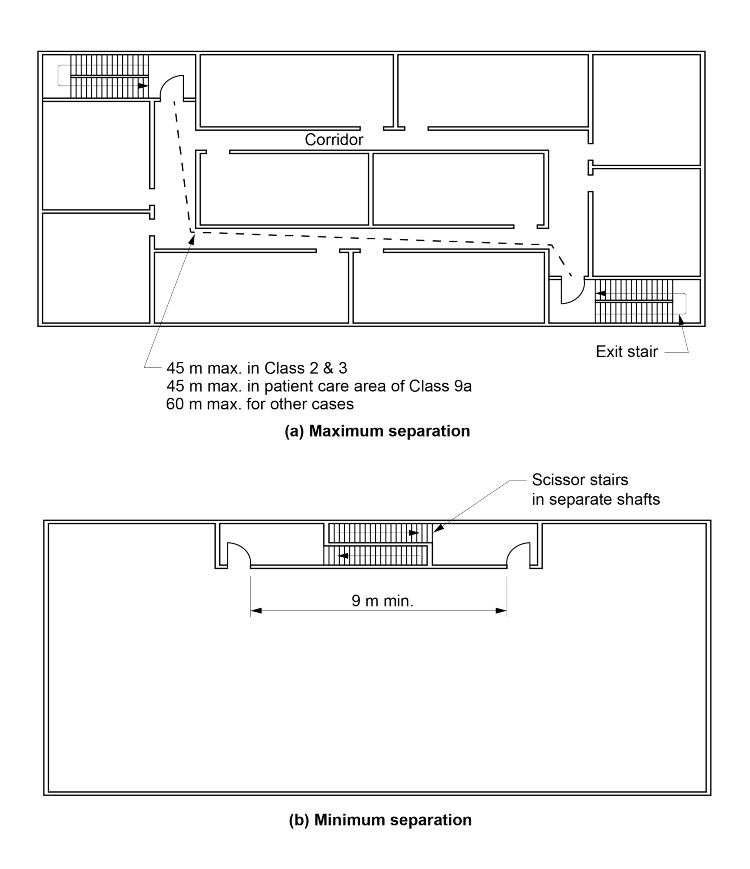
Figure D2D6b: Plan showing converging paths of travel