To enable the safe movement of people using stairways.
Purpose of a landing in a stairway
The purpose of a landing is to limit the number of risers to provide a rest area for the people using the stairway, and to allow the stairway to change direction if needed.
Maximum grade of 1:50—D3D15(a)
The maximum grade of 1 in 50 required under D3D15(a) makes sure that the landing is as level as possible, but still allows a slight slope for drainage if necessary.
Minimum landing length—D3D15(a)(i)
The minimum length of a landing allows people using the stairway to rest, and reduces the risk of a person falling more than one flight of stairs.
Surface of a landing—D3D15(a)(ii)
Under D3D15(a)(ii), landings must have a surface or strip at the edge of the landing to prevent a person slipping over and injuring themselves. In each case the surface or edge strip must have a slip-resistance classification when tested in accordance with AS 4586. Similar to D3D11(3) there are two tests (the wet pendulum test or the oil-wet inclining platform test) and two conditions (dry or wet) to be considered.
Class 9a buildings—D3D15(b)
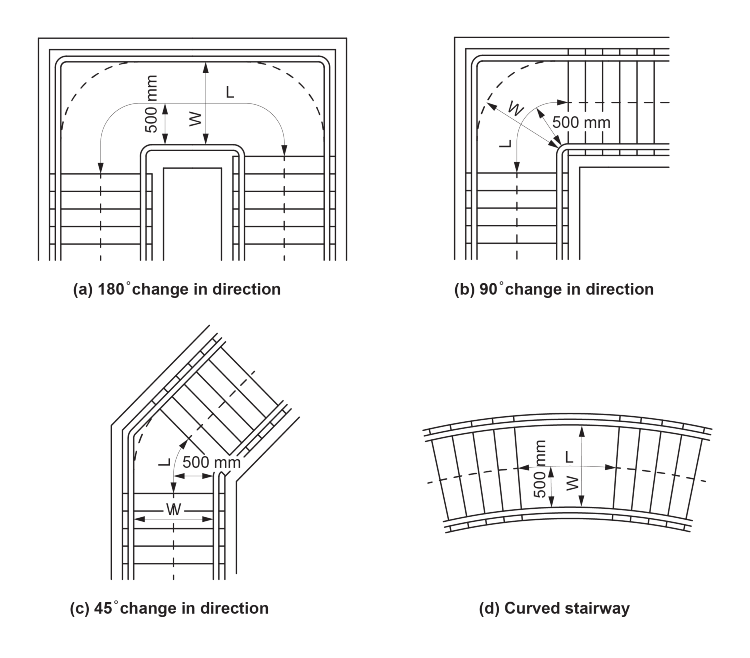
D3D15(b) provides two options for landings in Class 9a buildings. The aim is to aid the use of a stretcher. Figure D3D15 illustrates the method of measuring the length of landings as required by D3D14.
Figure D2.14: Method of measuring the length of landings as required by D2.14